
When Access Fails, Survival Becomes a Daily Risk
In remote Himalayan villages, interconnected failures in access, water, and livelihoods create systemic risks that drive long-term settlement decline.
FROM SYMPTOMS TO STRUCTURE
Beyond Daily Hardship: Understanding the Risk
On the home page, we highlighted the visible realities—
women walking long distances, children navigating unsafe routes, elderly residents without timely healthcare.
These are not isolated hardships.
They are symptoms of a deeper structural issue: last-mile access failure.
This issue is not episodic—it is embedded in how access is structured in remote hill settlements.
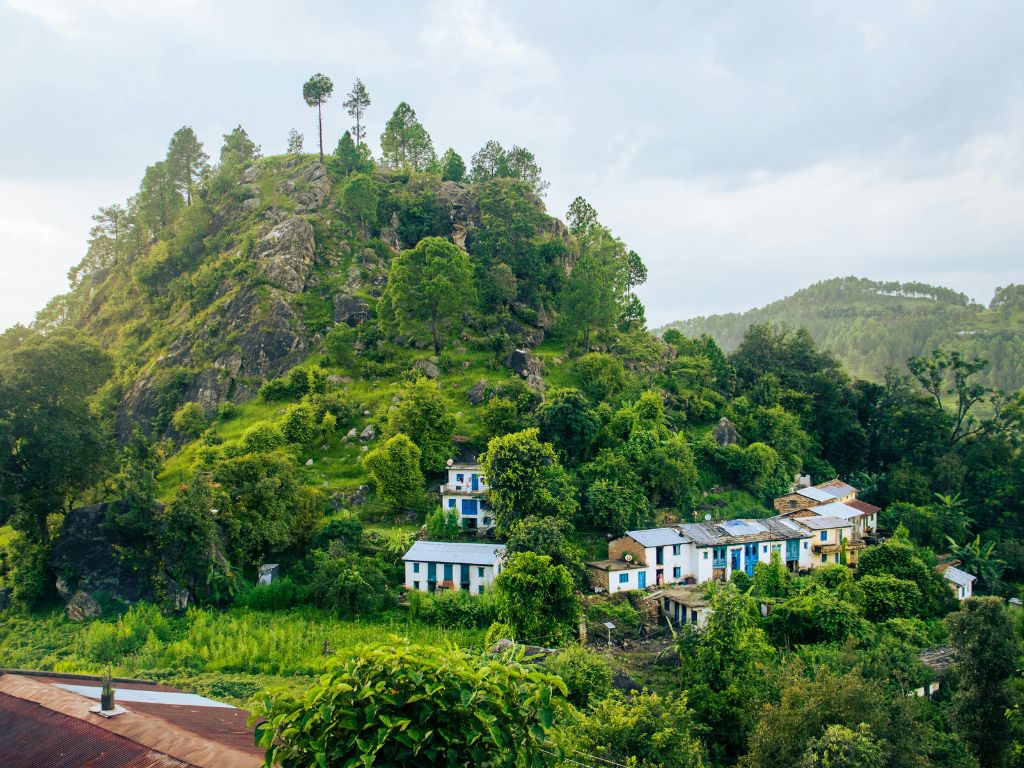
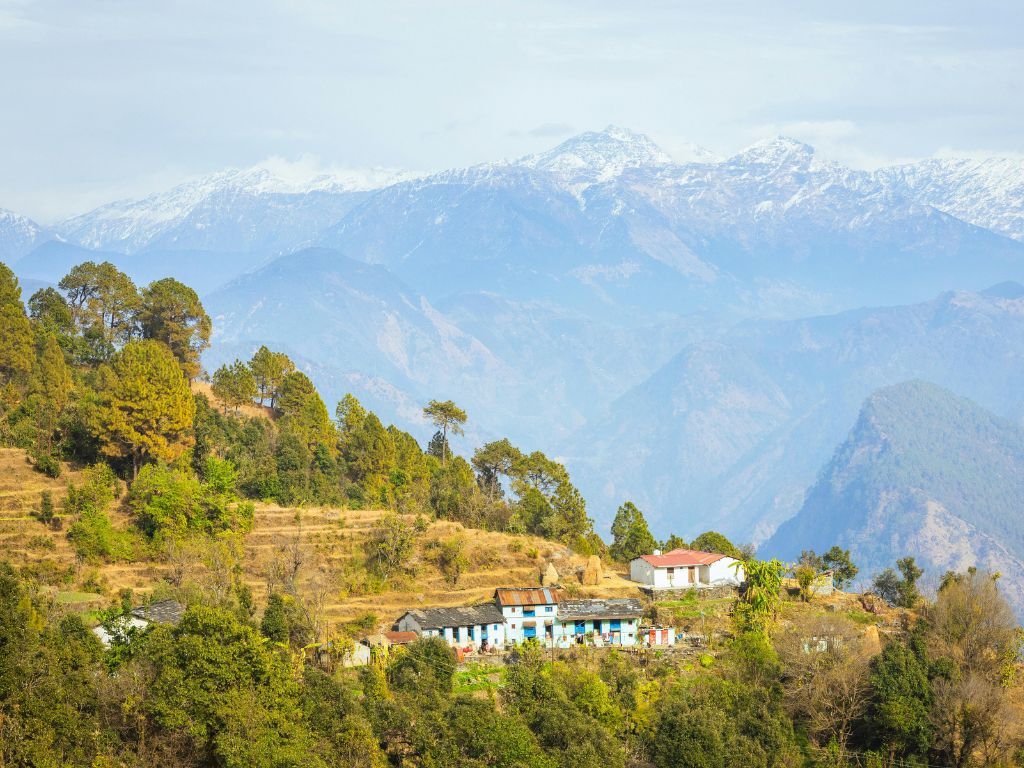
Khitoli represents a typical last-mile Himalayan settlement facing these conditions.
When access is limited to narrow, unpaved footpaths, every essential activity becomes a risk.
These conditions collectively drive long-term settlement decline and eventual village abandonment.
CORE SYSTEM FAILURE
A System of Interconnected Risks
Access Failure
- No motorable connectivity
- No stretcher-compatible pathways
- Delays in emergency evacuation
Impact: Immediate risk to life during medical emergencies
Water and Resource Stress
- Drying natural springs
- Longer travel for water access
- Increased daily labour burden
Impact: Reduced settlement sustainability
Livelihood Instability
- Crop loss due to wildlife
- Limited market access
- Reduced agricultural reliability
Impact: Income insecurity and declining viability
Demographic Pressure
- Male outmigration
- Women as primary workforce
- Elderly left without support
Impact: Increased physical and social vulnerability
Safety Risks for Children
- Long forest routes to school
- Exposure to wildlife and terrain hazards
Impact: Unsafe and inconsistent access to education
Mobility Burden on Women
- Long-distance transport
- Manual carrying of essentials
- Limited mobility access
Impact: Increased physical strain and time burden
Cascading Risk Mechanism
These Risks Reinforce Each Other
Lack of access does not operate in isolation.
Limited access triggers a cascading risk across village systems.
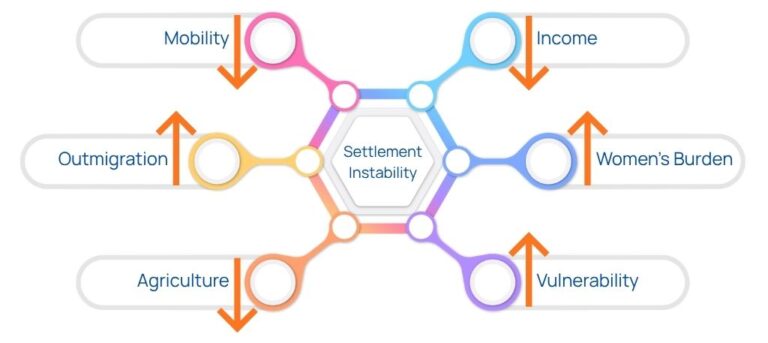
This is not a temporary condition—it is a structural trajectory.
At the same time:
Water stress + unsafe routes + healthcare gaps → compound daily risk
This is how villages gradually move toward instability and depopulation.
Seasonal Crisis Layer
Seasonal Isolation Turns Risk into Crisis
- During monsoons: landslides block already fragile paths
- During winters: mobility becomes severely restricted
- Emergency access becomes nearly impossible
Result: Routine challenges escalate into life-threatening situations
Administrative Failure
Why These Conditions Continue
- Standard infrastructure models do not adapt to hill terrain realities
- Execution depends on contractor-led approaches, limiting last-mile reach
- Fragmented implementation across schemes prevents village-level convergence
- Remote settlements remain outside effective administrative delivery
- Terrain-specific execution capacity is missing at local level
The issue is not the absence of solutions—but the absence of last-mile execution.
Public Safety Framing
Not a Development Gap — A Public Safety Concern
The absence of last-mile access in Himalayan villages is:
- A direct risk to life
- A mobility and access failure
- A last-mile governance gap
- An administrative responsibility
WHY A DIFFERENT APPROACH
A Structured, Terrain-Appropriate Response Is Required
The nature of last-mile access failure in Himalayan villages requires a phased, terrain-appropriate, and convergence-based response. Standard infrastructure models are not designed for these conditions, making a different execution approach essential.