
Khitoli: A Live Model for Village System Restoration
A field pilot to test and refine a scalable approach for reducing risk and improving settlement stability in Himalayan villages.
WHY KHITOLI
Why Khitoli
Khitoli is not an isolated case.
It reflects the conditions seen across many remote Himalayan villages:
- No road connectivity
- Dependence on natural springs for water
- High male outmigration
- Exposure to wildlife and terrain risks
This makes Khitoli a representative site for testing and refining a scalable model.
Khitoli reflects the systemic conditions that drive village instability and outmigration across Himalayan regions.
GROUND REALITY
Baseline Conditions in Khitoli
The following baseline conditions reflect the systemic risks identified earlier.
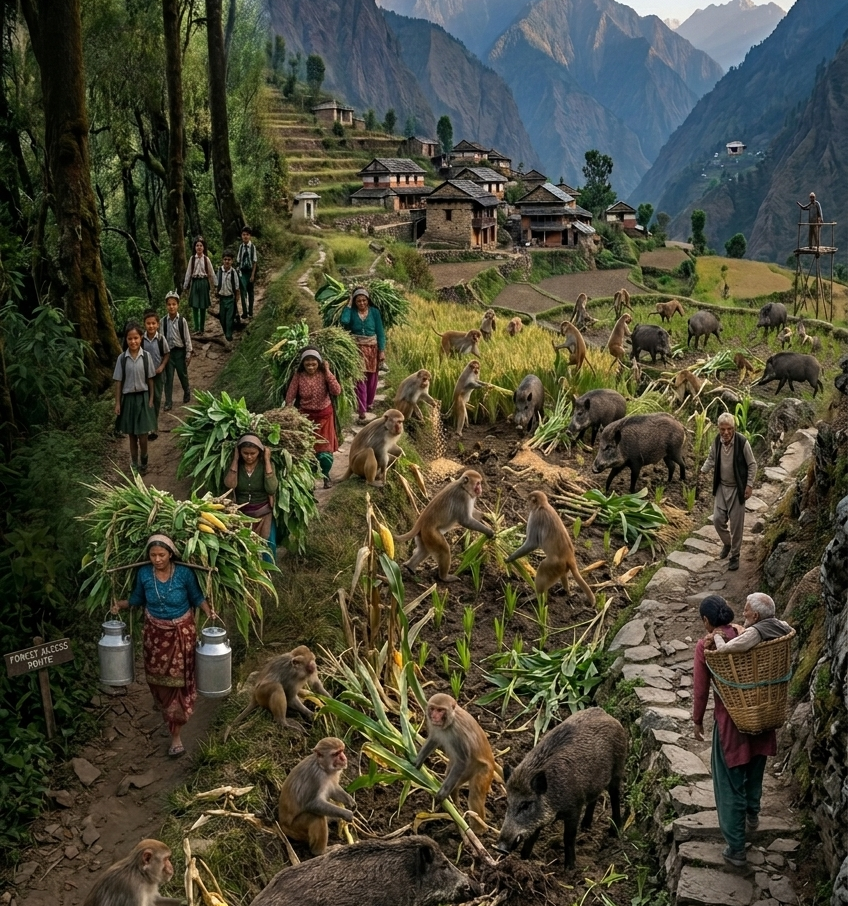
- Movement depends on narrow footpaths
- No stretcher-compatible access
- Women transport milk and fodder over long distances
- Children use forest routes to reach school
- Elderly lack timely healthcare access
- Crop loss due to wildlife
WHAT WE ARE DOING
Early Actions on Ground
Initial steps have been taken to understand conditions and begin structured intervention planning.
Community Engagement
- Discussions with residents to identify priority risks
- Understanding mobility, water, and livelihood challenges
Access Planning
- Mapping of existing footpaths
- Identification of critical routes for safe movement
- Prioritizing emergency access paths
Water Source Mapping
- Identification of natural springs (naulas and dharas)
- Assessing current condition and usage
Risk Assessment
- Identifying wildlife-affected zones
- Mapping terrain risks and seasonal barriers
These actions establish the foundation for developing safe access and reducing immediate risk.
WHAT WILL CHANGE
Expected Outcomes from Phase 1 Interventions
- Improved emergency response capability
- Reduced physical burden on women
- Safer and more reliable access routes
- Improved water access efficiency
- Reduced livelihood losses due to wildlife
These changes are essential for restoring safety, dignity, and long-term settlement viability.
Beyond One Village
From Pilot to Scalable Model
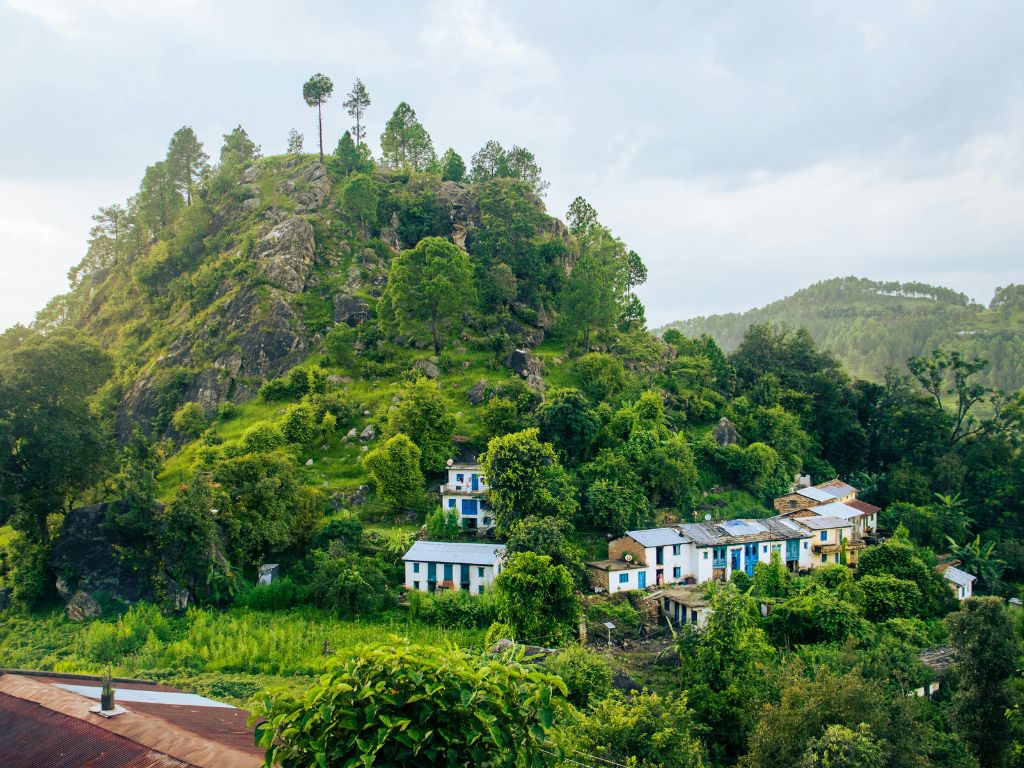
Khitoli serves as a live implementation site to validate a replicable model for last-mile Himalayan settlements.
The learnings from this pilot will be used to:
- Design interventions for similar villages
- Improve convergence with government systems
- Build a scalable approach for last-mile Himalayan settlements
Support the Khitoli Pilot
Enable implementation and scaling of a field-tested model for improving access, reducing risk, and stabilizing village systems.