
Partner to Restore Last-Mile Village Systems
Collaborate to implement structured, scalable solutions that improve access, reduce risk, and prevent village decline.
PHILOSOPHY
Our Partnership Approach
We work through convergence—not standalone projects.
Partnerships are designed to strengthen last-mile execution using existing systems and community-led planning.
We collaborate to:
- Strengthen last-mile execution systems
- Enable village-level planning
- Converge with government schemes
- Build scalable, field-tested models
Every partnership is aligned to structured, phased implementation—not standalone activities.
PARTNERSHIP TRACKS
Ways to Engage
- CSR & Institutional Partnerships
For organizations supporting structured, scalable rural interventions:
- Fund access pathways and infrastructure
- Support water systems and risk mitigation
- Enable pilot implementation in high-risk villages
- Contribute to model development and scaling
Suitable for long-term, impact-oriented engagement
- Government Convergence
For alignment with government programs and last-mile execution:
- MGNREGA → pathways, drainage, retaining walls
- NRLM → women-led implementation and livelihoods
- PMGSY (where applicable) → road connectivity
- Animal Husbandry → livestock and risk reduction
Focus on improving execution, not duplicating schemes
- Individual Engagement
Individual Engagement
For individuals contributing specific skills and expertise:
- Field research and documentation
- Technical inputs (planning, mapping, systems design)
- Communication and outreach support
Structured, skill-based engagement—not informal volunteering
ENGAGEMENT PROCESS
How Partnerships Are Structured and Implemented
Initial Discussion
Understanding intent, objectives, and alignment
Scope Alignment
Defining intervention areas and partnership scope
Field Assessment
Ground validation of risks, access gaps, and priorities
Planning
Designing intervention plan aligned with phased model
Implementation Setup
Scheme convergence, approvals, and community readiness
Execution
On-ground implementation with community-led approach
Monitoring
Continuous tracking through local institutions
Evaluation
Outcome assessment and course correction
Engagement is structured, transparent, and aligned with field realities and implementation constraints.
CURRENT PRIORITIES
Where Support Is Needed Now
Current implementation priorities under the pilot and scaling phase:
- Development of stretcher-compatible access pathways
- Mapping and revival of natural water sources
- Identification and mitigation of wildlife-affected zones
- Strengthening village-level planning systems
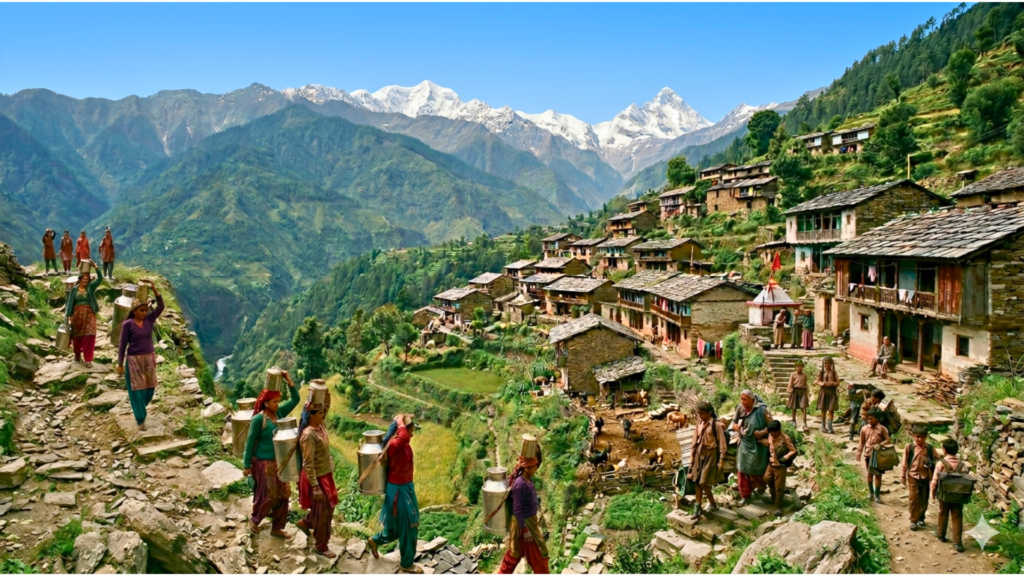
IMPACT
Outcomes Enabled Through Partnership
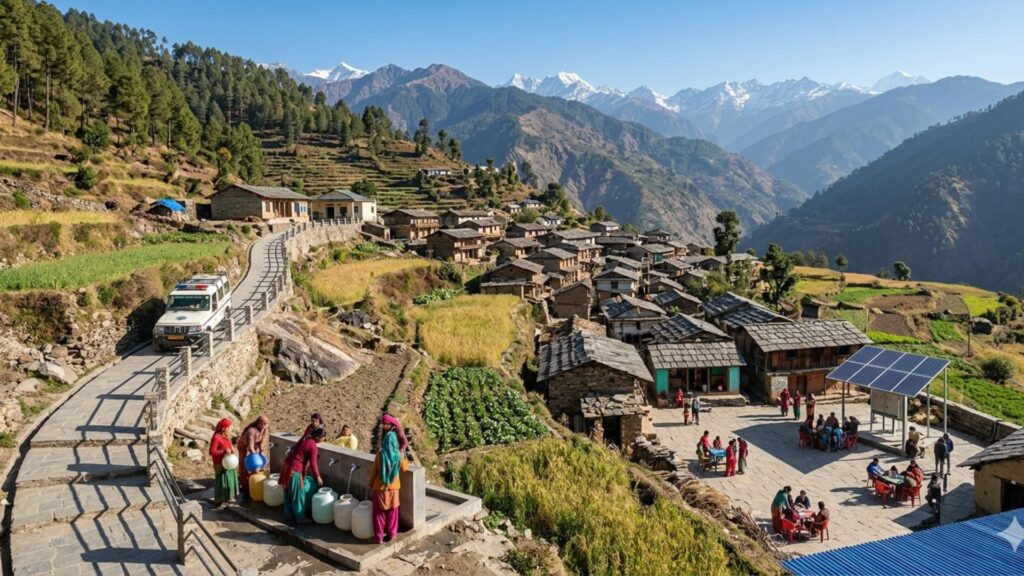
- Safe and reliable access pathways
- Improved emergency mobility
- Reduced physical burden on women
- Improved water access efficiency
- Stabilized village systems
These are foundational changes that improve safety, dignity, and long-term settlement viability.
Start a Structured Partnership
Engage in partnerships to implement and scale last-mile access and village system solutions across Himalayan regions.